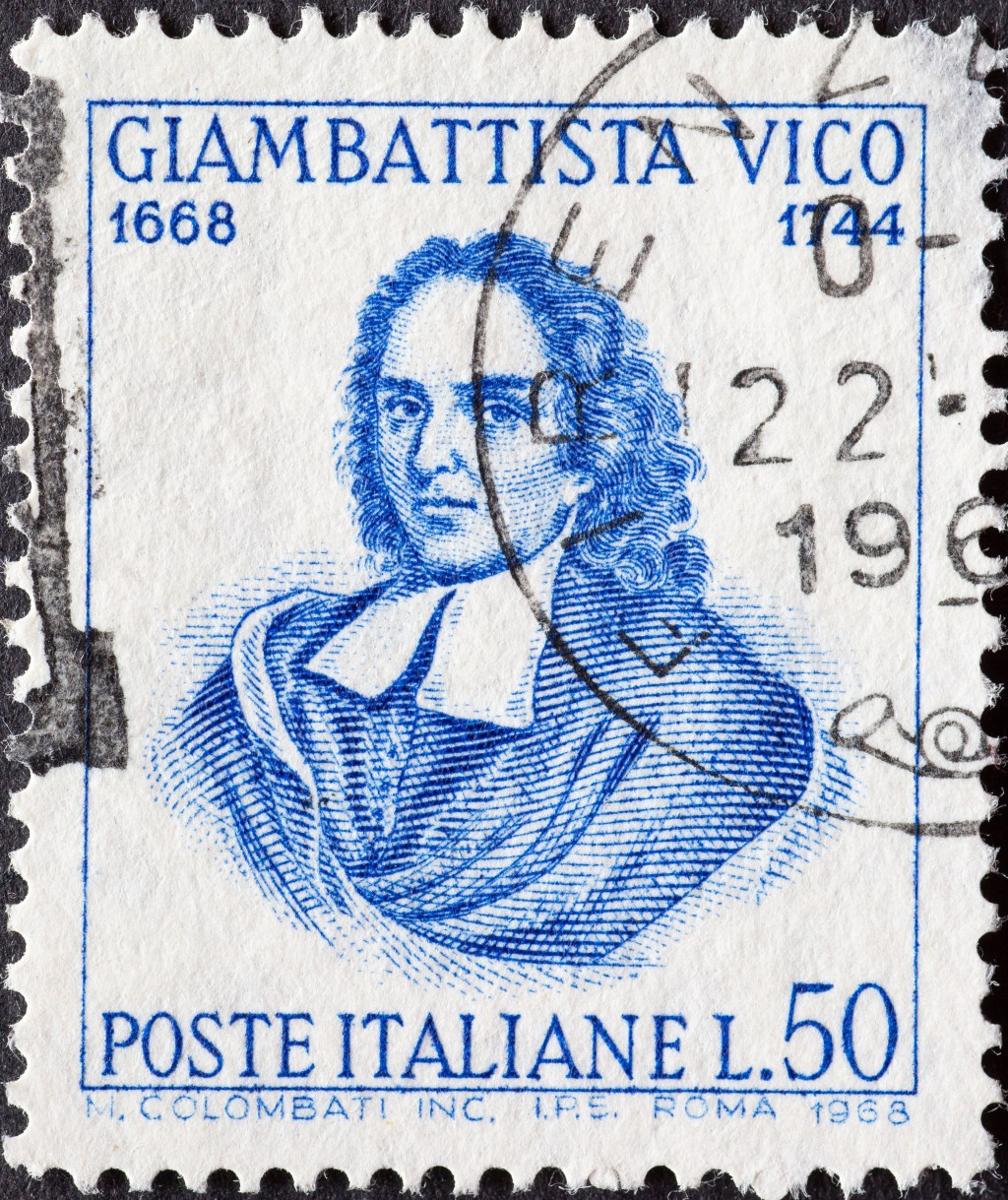
This essay examines how, in Vico, the alterity of nature plays a crucial role in the formation of humanity —not as something separate from the human being, but as what remains irreducible to purely human paradigms. Nature, as part of the intricate web of life’s complexity and interconnectivity, resists both uncritical historicization and reduction to anthropocentric terms. Unlike Machiavelli, Vico does not ground his conception of humanity and its institutions solely in Roman history. Rather, he recognizes the necessity of exploring the “empty spaces” of history in order to uncover the deepest layers sedimented within the human mind, including those belonging to pre-alphabetic cultures.
The theoretical implications of this approach to Vico’s humanism and his understanding of history open a new perspective on Auerbach’s claim that “our philological home is the earth.” In this light, philology and philosophy—in a genuinely Vichian manner—return to interrogate not only historical institutions but also their relations to the earth and the natural environment, as constitutive dimensions in the making of humanity. Therefore, this essay proposes Vico’s notion of the “places of humanity” as the generative force behind a new humanism—one that is more-than-human, attentive to what has been excluded or undervalued by purely historicist readings of his philosophy.
“Vico’s More than Human Humanism.” Annali d’Italianistica, Vol. 29, (2011): 381-400. Print.


 Massimo Lollini
Leave a comment