How we talk about peace, and, inevitably, war, in the Anthropocene has driven a project I’ve been developing for several years: a journey through the Dolomites’ First World War battlefields. The exploration of the mountain range includes a spiritual dimension, shaped by the majestic landscape itself and inviting reflection on the deeper connections between nature, memory, and the human experience. The post explores the intertwined narratives of peace and war and the interdisciplinary seminar Exploring the Dolomites I have developed at the University of Oregon starting in 2019, reflecting on human history, geological time, and the complexities of the Anthropocene, our current geological epoch where human activity has become the dominant force shaping the Earth’s climate and ecosystems.
I first encountered these mountains as a teenager, a tourist more interested in scenery than meaning. At the time, I barely noticed what this majestic landscape could teach me about human history, culture, or even my own existence. Everything changed on a 2017 journey through the Bletterbach Gorge, Marmolada, Lagazuoi, and Cinque Torri.
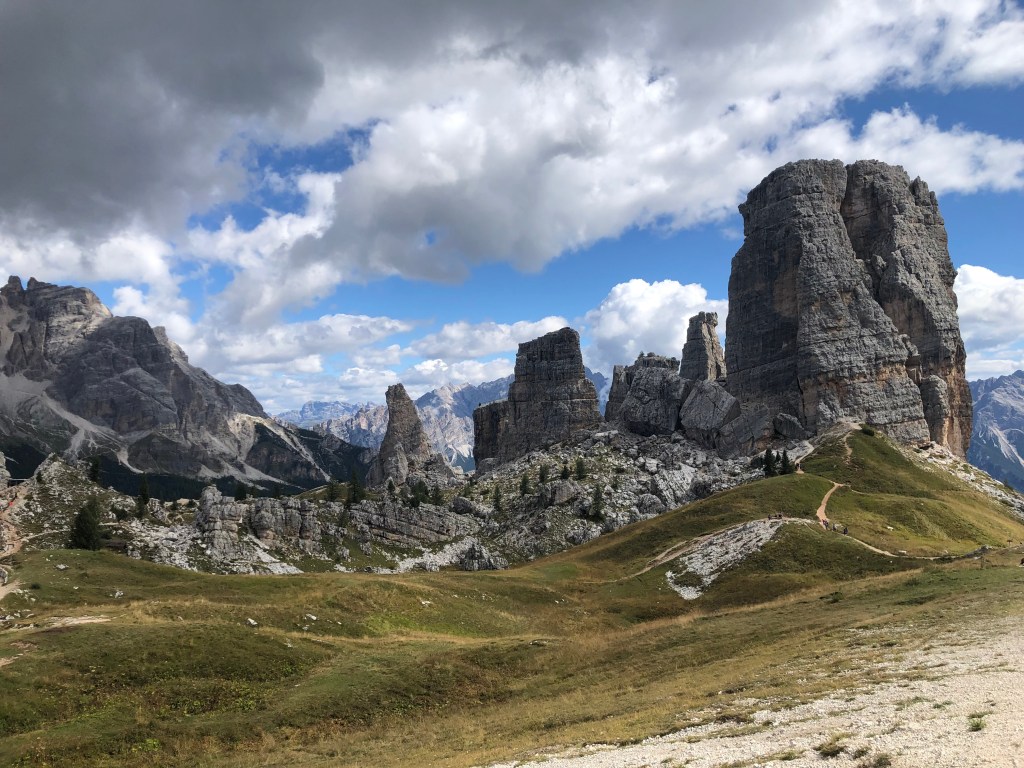
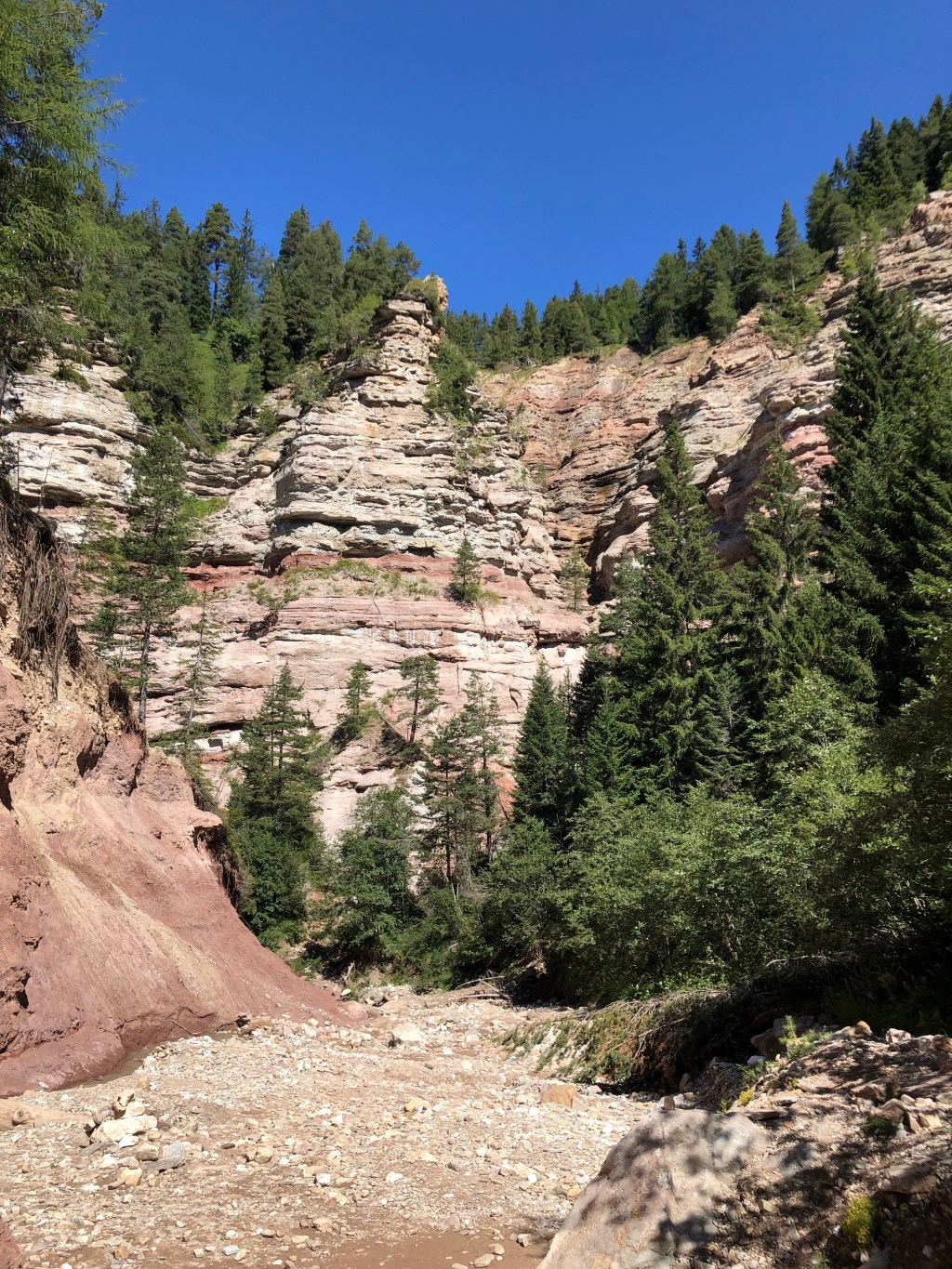
Walking the paths of the Cinque Torri open-air historical museum or the Bletterbach Gorge “Natural Monument” was a crucial moment of inspiration for conceiving the project. The Dolomites began to reveal themselves as living archives: their ancient rock formations telling the story of the planet’s deep geological past, and the remnants of World War I bearing witness to a recent, devastating human history. Standing among the gorge’s rocks or within the trenches and fortifications built for war, especially while exploring the Lagazuoi tunnels, I sensed an almost tangible darkness, an enduring shadow rooted in history’s depths.
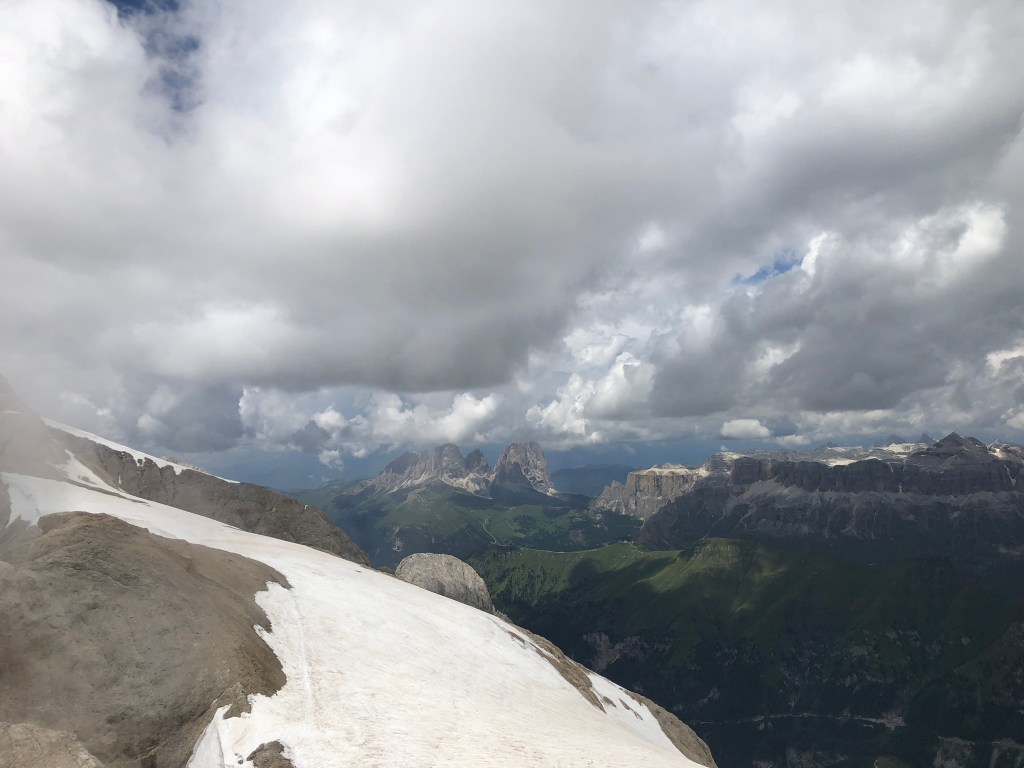
This darkness reveals a profound truth: both human and natural violence leave permanent scars on our geological and cultural memory. Far above, when we can escape the noise of overtourism and finally reflect on the mountain scenery from a high vantage point, like the summit of the Marmolada, something shifts. The quiet landscape serves as a haunting reminder of how conflict irrevocably alters both the Earth and humanity. It is a silence heavy with unresolved loss, forcing us to confront how history’s darkest moments continue to ripple through our natural world and collective consciousness. Today, this reality is made devastatingly visible in the rapid melting of the Marmolada glacier, a retreat that World War I’s infrastructure, bombings, and tunneling helped accelerate.
The 2017 hike inspired me to bring the Dolomites’ lessons into my teaching and share them with students. In this spirit, while working at the University of Oregon, I created a GEO (Global Education Oregon) interdisciplinary travel and field-study seminar that invites participants to explore the Dolomites in interdisciplinary dimensions—geological, historical, and cultural—while collectively reflecting on the enduring meanings of war and peace in our complex Anthropocene world.
Leading this seminar each year has transformed my understanding of the landscape. Every year, new groups of students and colleagues challenge me with fresh insights. Their questions push me to keep seeking new vocabularies of peace, proving that the mountains aren’t the only things evolving—our collective memory is, too.
Much has been written about the high-altitude brutality endured by Italian and Austrian soldiers. Far less attention has been paid to the violence inflicted directly upon the landscape, a environmental scar that demands our remembrance in a world still plagued by active conflict.
As I have already discussed in part in another post, Some Reflections on World War One, the Dolomites, and the Current War in Ukraine, the scarred peaks of the Dolomites prove that environmental violence is ultimately suicidal for humanity. Over time, the soldier and the soil become one; humans literally become embedded and buried within the earth like any other natural element –a grim reality physically preserved not only within the trenches and tunnels, but also in the countless corpses permanently incorporated by mountain landslides and explosions.
This tragic reality expands on Leonardo da Vinci’s famous Renaissance definition of war as a “most bestial madness” (pazzia bestialissima). He used this vivid term in his Treatise on Painting, specifically within his detailed technical instructions on how an artist should realistically paint a battle scene. He was describing the raw, animalistic cruelty of men killing men. Today, in the Anthropocene, this madness has evolved. The “bestial madness” of modern conflict is no longer just a war against other nations, it is a war against the Earth itself. It strips away our humanity, reducing us to an irresponsible animal presence that destroys the very ecosystem we rely on to survive.
The entanglement of human and environmental violence is clearly embodied by the case of Mount Lagazuoi, in the heart of the Dolomites. Here, during the First World War, Austrian troops held the summit while Italian forces attacked from below by excavating more than a kilometer of tunnels inside the rock, with the aim of detonating mines beneath the enemy positions. The mine war, which culminated in massive explosions in May and June 1917, failed to alter the military balance but had devastating effects on the mountain itself. Entire sections of the Piccolo Lagazuoi were blown apart, producing gigantic landslides that remain visibly inscribed in the rock face today. Here are some historical images from 1915-18 I retrieved from the Archivio del Museo Centrale del Risorgimento.
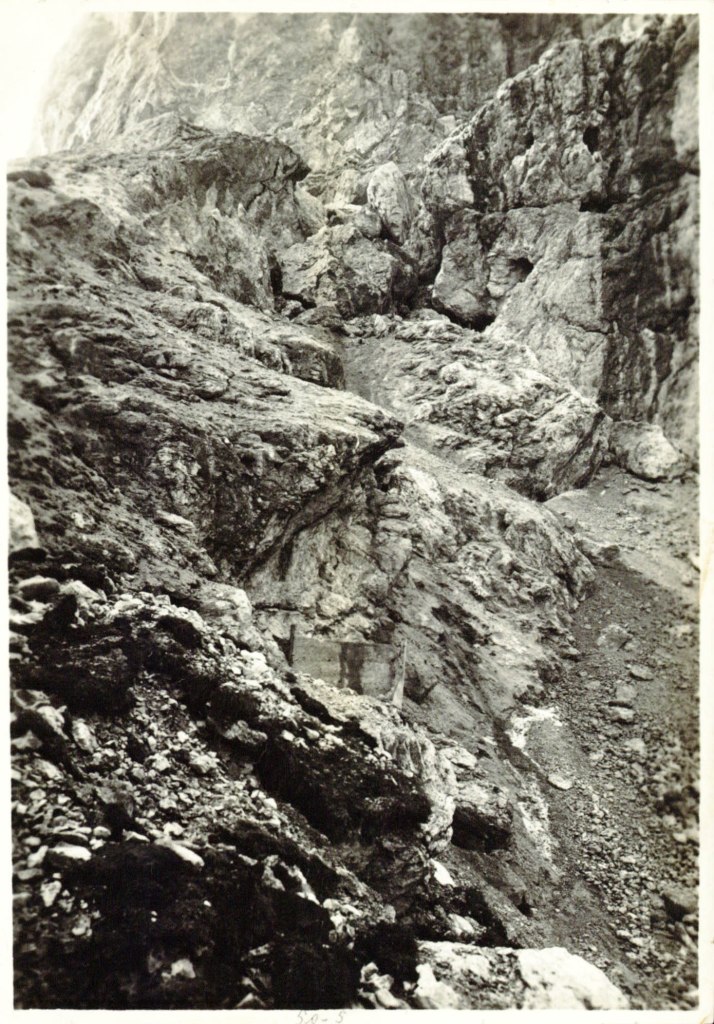
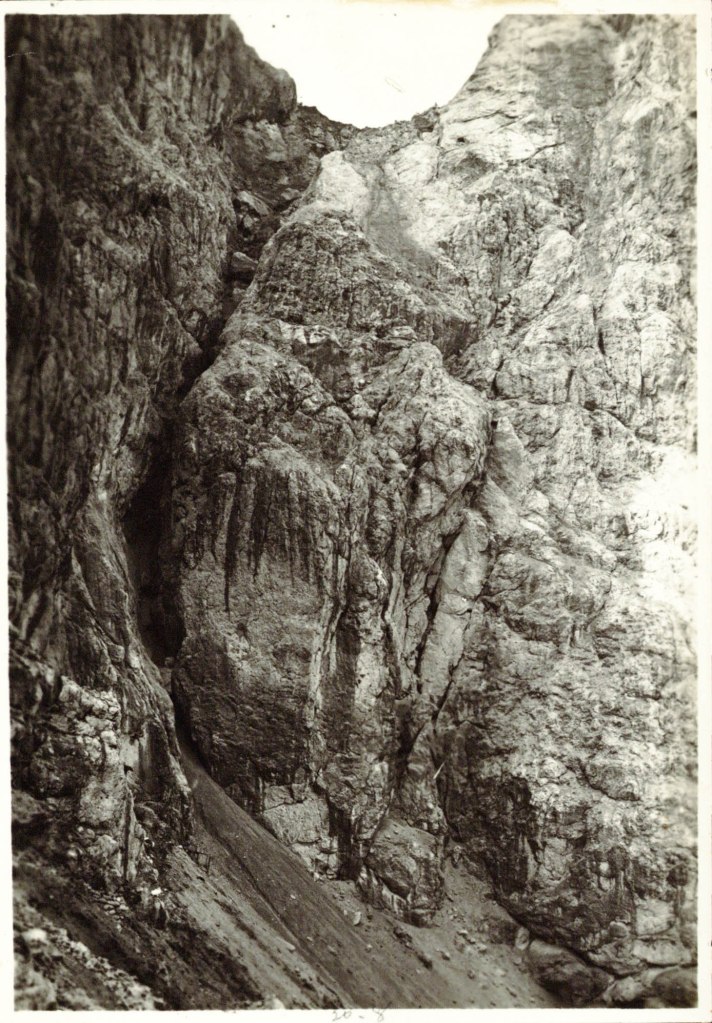
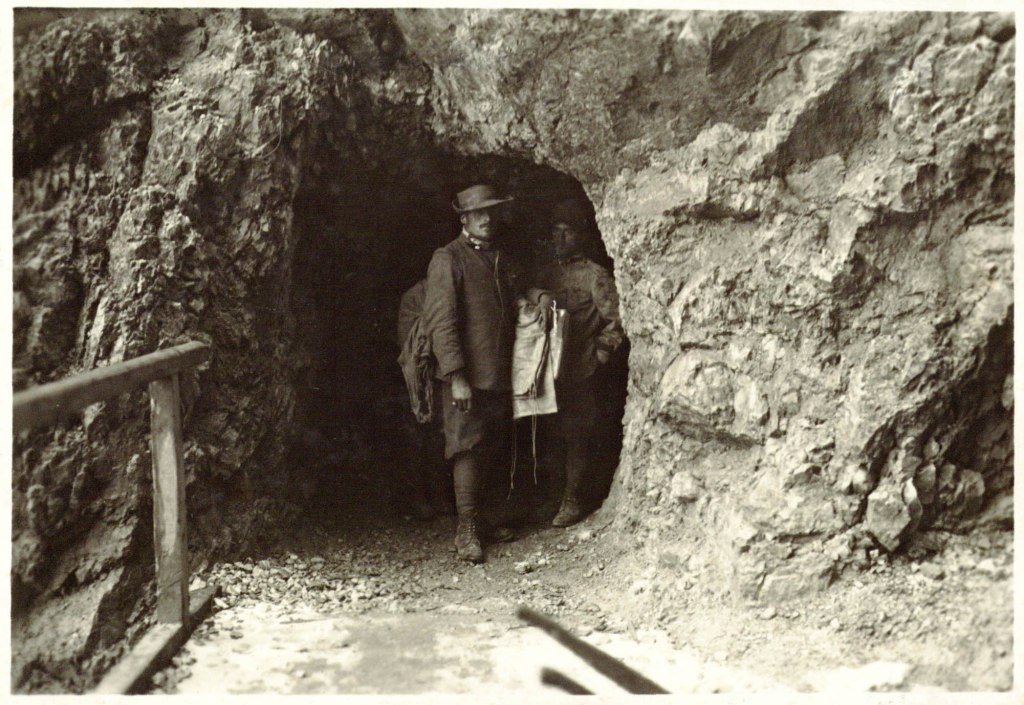
Gallery dug into the rock
The descent through the restored Lagazuoi Gallery—today the longest preserved First World War tunnel in the Dolomites—represents one of the most significant experiences of the Exploring the Dolomites program. Moving step by step inside the mountain, the hike makes the history of the Great War tangible and felt in the body: the narrow passages, darkness, cold, and silence let visitors directly perceive, at least in part, the extreme physical and psychological conditions in which soldiers lived and fought. At the same time, the tunnel offers a unique vantage point for understanding how warfare violently reshaped the Dolomitic landscape, carving scars that remain visible today. The experience thus connects human endurance, environmental transformation, and historical memory in a way that no external viewpoint could convey.
In an age marked by ecological upheaval and historical uncertainty, the project Exploring the Dolomites seeks to reconsider what peace and war might mean in the Anthropocene, and how they can be reimagined through a unified lens of nature and culture. By reading the landscape as both archive and witness, its strata scarred by conflict and its forms shaped by cycles of natural destruction and renewal, students encounter the intertwined narratives of war and peace inscribed in the terrain, the rocks, and the ground itself.
Within this framework, the sciences and humanities converge to reveal a profound reciprocity between humanity and the Earth. As experience has shown us, natural disasters in the Anthropocene emerge not only as signs of crisis, but also as manifestations of deeper processes of destruction and regeneration, with natural and human agents inextricably intertwined, as if the planet itself were responding to human excess. From this perspective, peace is no longer merely the absence of war, but a fragile, temporary equilibrium amid ongoing tension between human ambition and impact and the Earth’s unpredictable resilience.
The metamorphic zone between war and peace
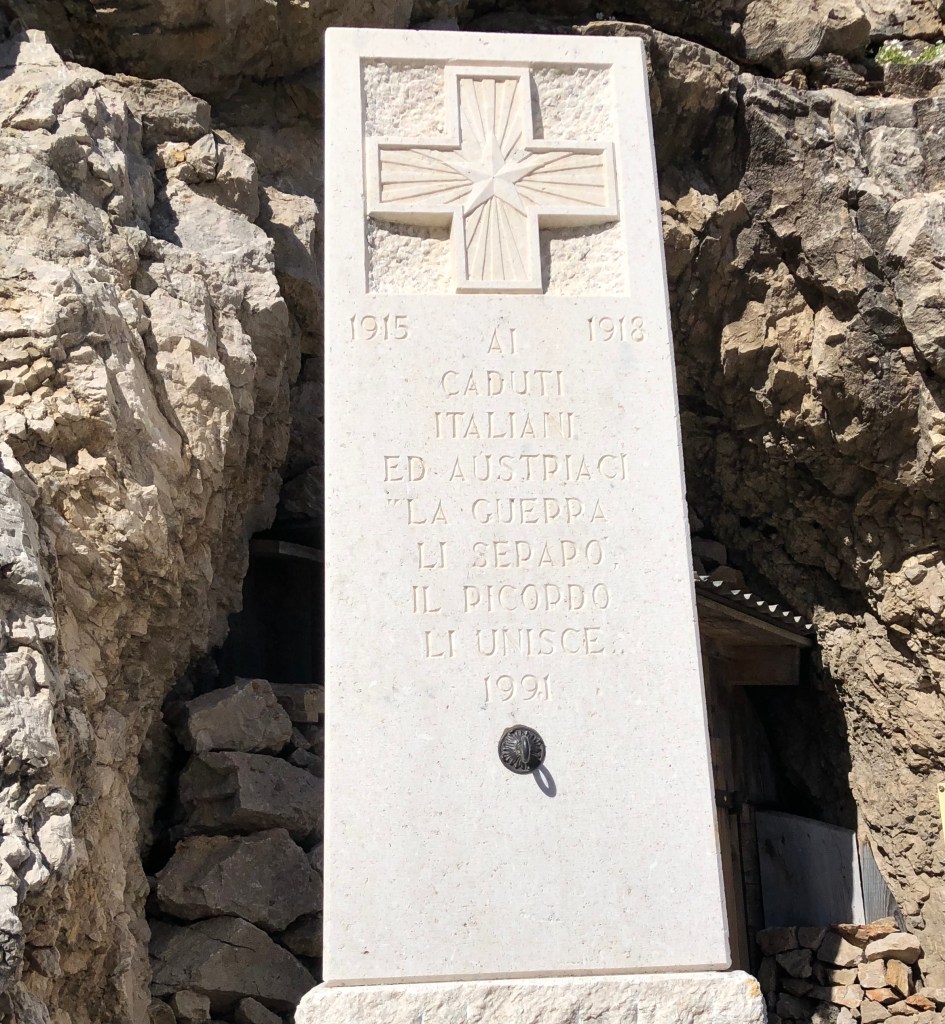
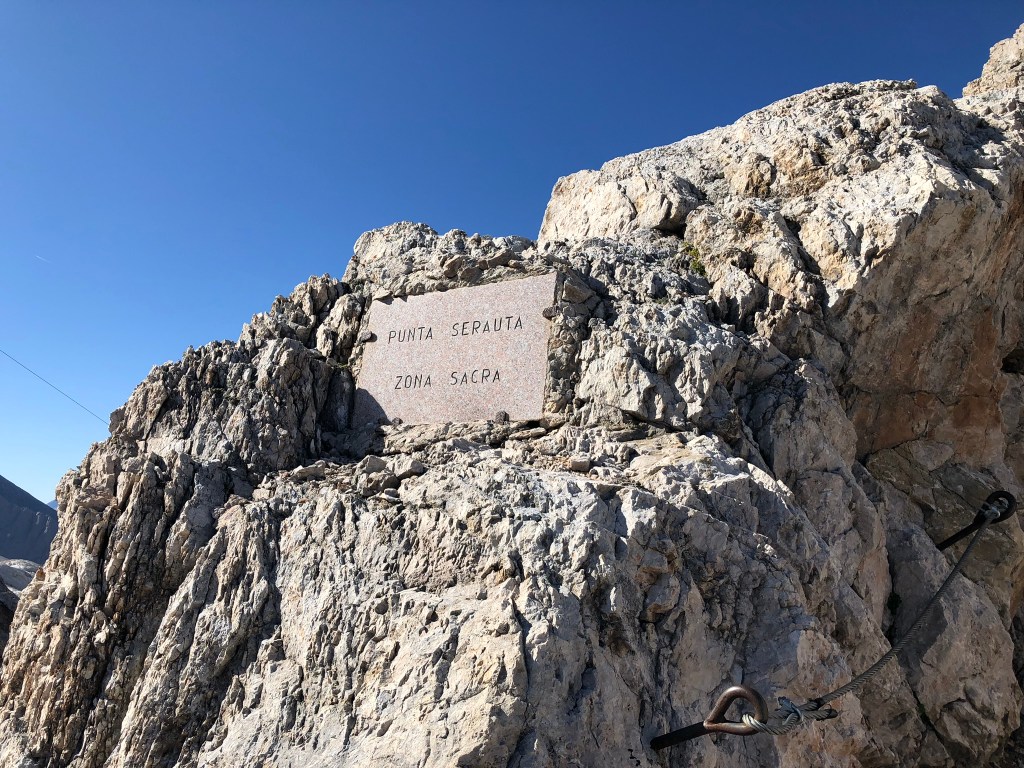
We found the first evidence of war in Bolzano: the Victory Monument, erected by Benito Mussolini to celebrate the annexation of Trentino-Alto Adige to Italy at the end of the First World War. I have analyzed the importance of this controversial monument in the blog post Recontextualizing Controversial Monuments: Lessons from Bolzano, historical and natural monuments. Signs of war are everywhere in the high peaks of the Dolomites, like the trenches on top of Mt Marmolada. Signs of peace that we have encountered only rarely, often placed within a landscape still marked by war –like the plaque among the trenches at the summit of the Marmolada– which commemorates how Austrian and Italian soldiers, once enemies in battle, are now united in remembrance of the fallen: “The war divided them, the memory unites them.” The monument is a carved marble column honoring the shared suffering and sacrifices of Italian and Austro-Hungarian soldiers who fought each other on the extreme, exhausting Marmolada front.
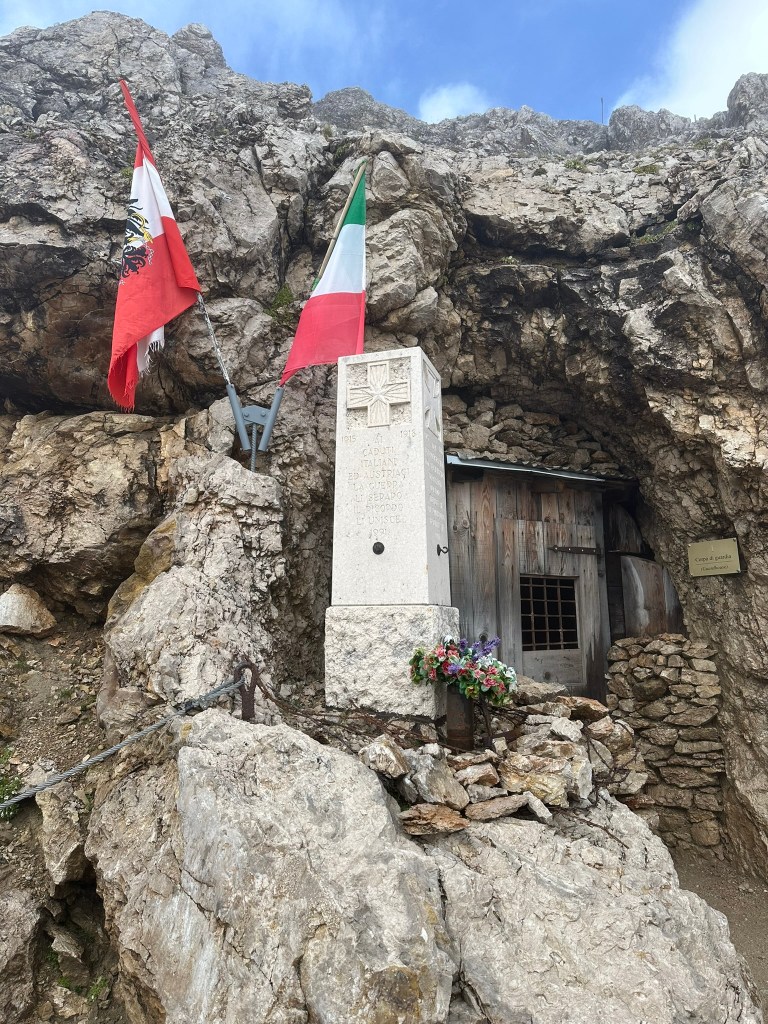
Photo by Massimo Lollini
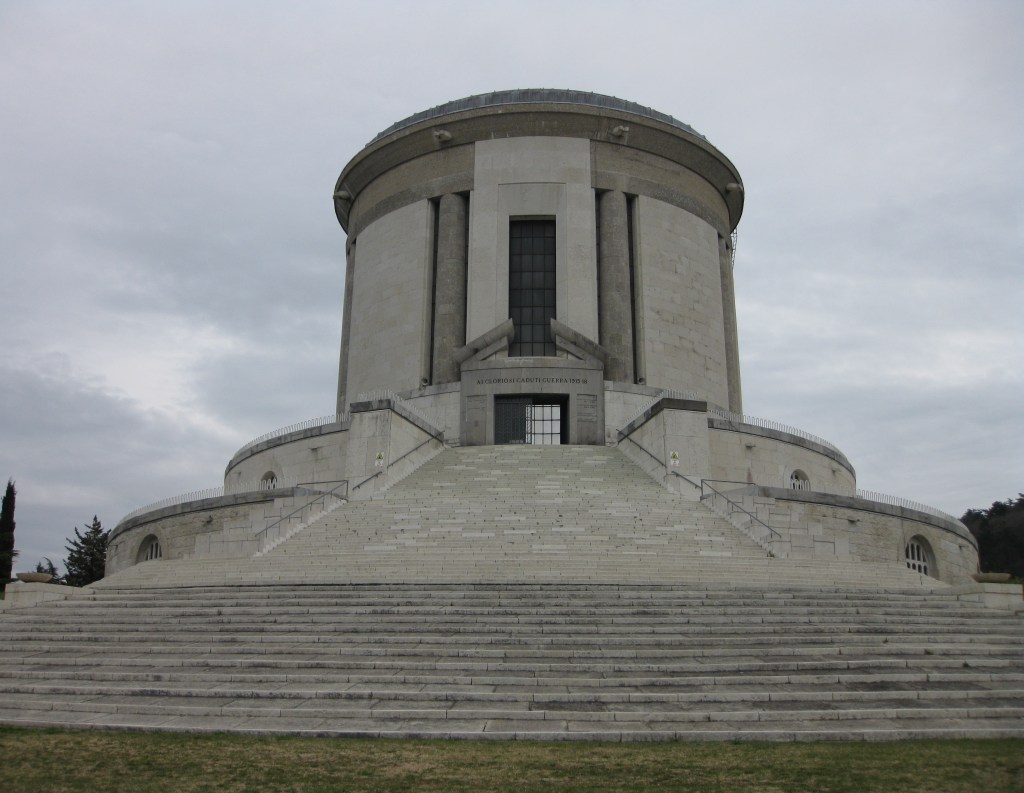
Another monument in Rovereto that inspires meditations on war and peace is the Military Shrine of Castel Dante. Built during the Fascist era between 1933 and 1936 as a symbol of Italian victory in the First World War, it later became a monument to the memory of all fallen soldiers in Trentino territory, including those on opposing fronts.
We met the last and most important sign of peace in Rovereto at the end of our journey: the Bell of Peace, commissioned in 1924 by Rovereto’s priest, Don Antonio Rossaro (1883-1952), to remember all the fallen of the recently concluded conflict. The bell was cast from the bronze of cannons from the nations that participated in the First World War. Stefano Zuech sculpted the bas-relief on the Bell, featuring allegorical scenes related to war and remembrance of the fallen.
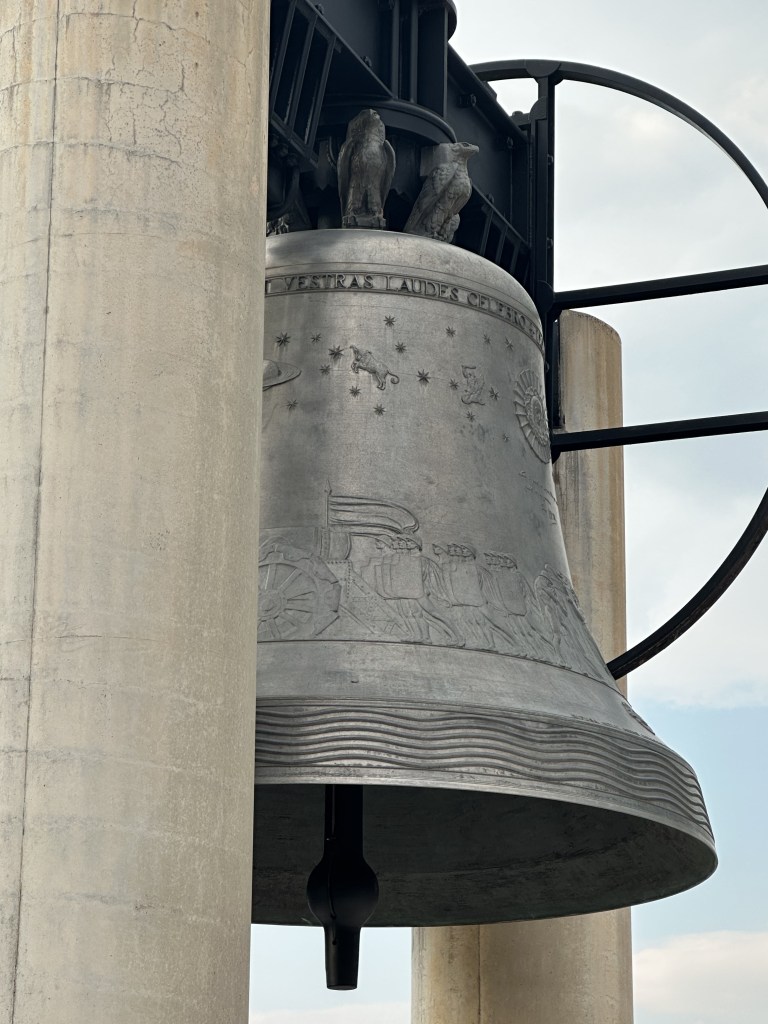
Bell of the Fallen, Maria Dolens Colle di Miravalle, Rovereto Trento, Italy
Photo by Massimo Lollini
For students focused on the natural sciences, identifying themes of war and peace in the environment is both complex and invigorating. They grapple with tangible evidence of conflict as they explore the Dolomites, asking questions such as: What physical signs of war and peace can we observe in the natural environment we encounter? This inquiry is especially pertinent in the Anthropocene, a new geological era marked by significant human impact on Earth’s geology and ecosystems. Earth science students analyze ecological disruptions, biodiversity changes, and shifts in geological formations to uncover the consequences of human actions from both historical and deep-time perspectives.
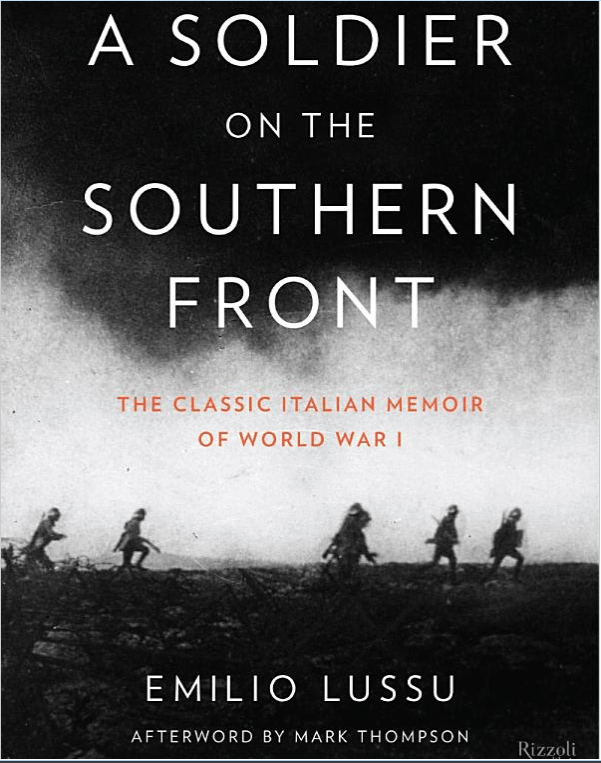
While Earth science students seek measurable environmental changes and link them to historical and contemporary issues of conflict and cooperation, their humanities counterparts approach these themes through cultural narratives and philosophical inquiry. Humanities students examine how literature, art, and philosophy reflect and respond to human experiences with the natural world. They focus on interpreting the existential and socio-cultural significance of these environments, analyzing how human history and cultural expression articulate the complexities of peace and conflict. Particularly moving is A Soldier on the Southern Front (1936), a WW1 memoir by Emilio Lussu, who fought on the Asiago Plateau near the Dolomitic front. This memoir exposes the tragic absurdity and cruelty of military command while ultimately revealing the shared humanity and desire for peace among opposing soldiers trapped in the horrors of trench warfare.
In this interdisciplinary dialogue, students of the Earth sciences and humanities pursue different methodologies, yet both approaches are crucial to understanding the intricate dynamics between humanity and the environment. Combining empirical observation in the natural sciences with the interpretative frameworks of the humanities shows how understanding war and peace transcends simple definitions and requires multifaceted exploration.
Ultimately, philosophy connects the sciences and humanities, fostering an integrative approach to the profound challenges we face in the Anthropocene. By weaving together insights from both domains, we can strive for deeper peace and sustainability, recognizing that the natural world tells a story of both conflict and harmony, shaped not only by human actions in historical time but also by natural forces in deep time. What about the previous geological eras and the deep time they represent? Can we consider the Dolomites’ orogenesis through the lens of peace and war, even in the absence of human presence?
The Bletterbach natural monument we visit reveals traces of plate tectonics and profound natural upheavals, volcanic explosions, and seaquakes. The rocks and fossils of the Bletterbach Gorge also document the Dolomites’ geological history, revealing catastrophic events such as the great extinction of plant and animal species during the Permian, which have never been seen again on the face of the earth. What scientific and ethical reflections can the geological history of the Dolomites suggest to us?
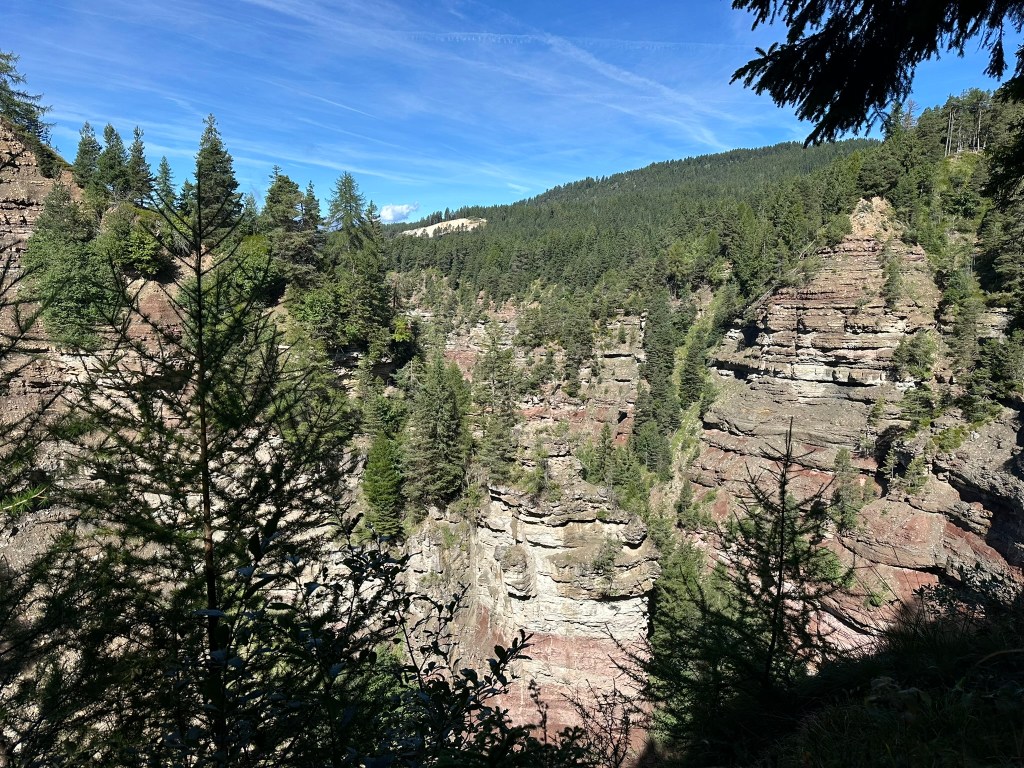
From an interdisciplinary and philosophical point of view, a comprehensive, truly ecocritical approach to these questions contemplates a wide variety of disciplines, including the most current scientific answers and even a reconsideration of the legends and myths that, over time, have accompanied the narrative habitation of the mountainous territory and the invention of the places within it. One of the legends we study, The mirror of Misurina, analyzed in another post on this blog, provides an imaginative anthropomorphic explanation of the orogenesis of a Dolomite mountain. Nonetheless, the myth of matter’s perennial metamorphosis remains at the heart of the tale.
This aspect introduces a philosophical, more-than-human dimension to the legend. It is not by chance that Bruno Latour in seeking new words to go beyond the meaningless distinction between humans and non-humans or between Nature and Culture, sees in the idea of metamorphosis a possible way out:
“ If it is the world that interests us – and no longer “nature” – then we must learn to inhabit what could be called a metamorphic zone, borrowing a metaphor from geology, to capture in a single word all the “morphisms” that we are going to have to register in order to follow these transactions” (58).
Bruno Latour’s quote emphasizes a shift from traditional notions of “nature” as a static entity to a more dynamic, interconnected understanding of the “world.” By advocating an interest in the world rather than nature, Latour encourages us to see the complex relationships and interactions among elements in our environment, beyond simplistic dichotomies.
The term “metamorphic zone,” borrowed from geology, suggests an area of transformation and adaptation where different elements interact and change over time. In geology, metamorphic rocks form from pre-existing rocks through processes involving heat, pressure, and chemical change. Similarly, Latour’s use of the term suggests that the world is in constant flux, shaped by factors such as human activity, technology, and ecological dynamics.
By referring to all the “morphisms” that need to be registered, Latour highlights the need to recognize and document the diverse changes and interactions occurring within this metamorphic zone. This involves understanding how various entities- social, political, technological, and ecological- are interconnected and influence one another. In doing so, we can better grasp the complexity of these interactions and their implications for our understanding of the environment and society.
Ultimately, tracing these “morphisms” across the scarred landscapes of the Dolomites reminds us that war and peace are not merely human events, but powerful ecological forces. By mapping how social conflicts, political boundaries, and technological interventions reshape this metamorphic zone, we can begin to comprehend the deeply interconnected nature of our changing world. This exploration builds directly on the themes of geopolitical and planetary friction I have examined throughout this blog. For a broader look at how these dynamics operate globally, revisit my analysis of Bruno Latour’s theoretical perspective in Understanding Gaia: War, Peace, and the Anthropocene. Together with my companion post on Latour’s framework, these reflections underscore a vital truth: understanding our environment’s complex peace requires us to carefully document every interaction, human and non-human alike, that continues to shape our shared society.
Bibliography
Latour, Bruno, and Catherine Porter. Facing Gaia : Eight Lectures on the New Climatic Regime. Polity Press, 2022.
Images from the Archivio del Museo Centrale del Risorgimento (MCRR). Identification codes MCRR Album O 7(50.5), MCRR Album O 7(50.8), MCRR Album O 7(50.14)
Godromil, Ossuary of Castel Dante, Rovereto. Public domain, via Wikimedia Commons.


Leave a Reply